Precision
Our fictional N.01 calibre is designed for an approximate 42-hour power reserve: take the watch off on Friday evening and it is still running on Sunday morning.
The Craft
A mechanical watch is a small machine that turns stored energy into steady, visible time. Here is how one works — and how we design ours.
Watchmaking, explained
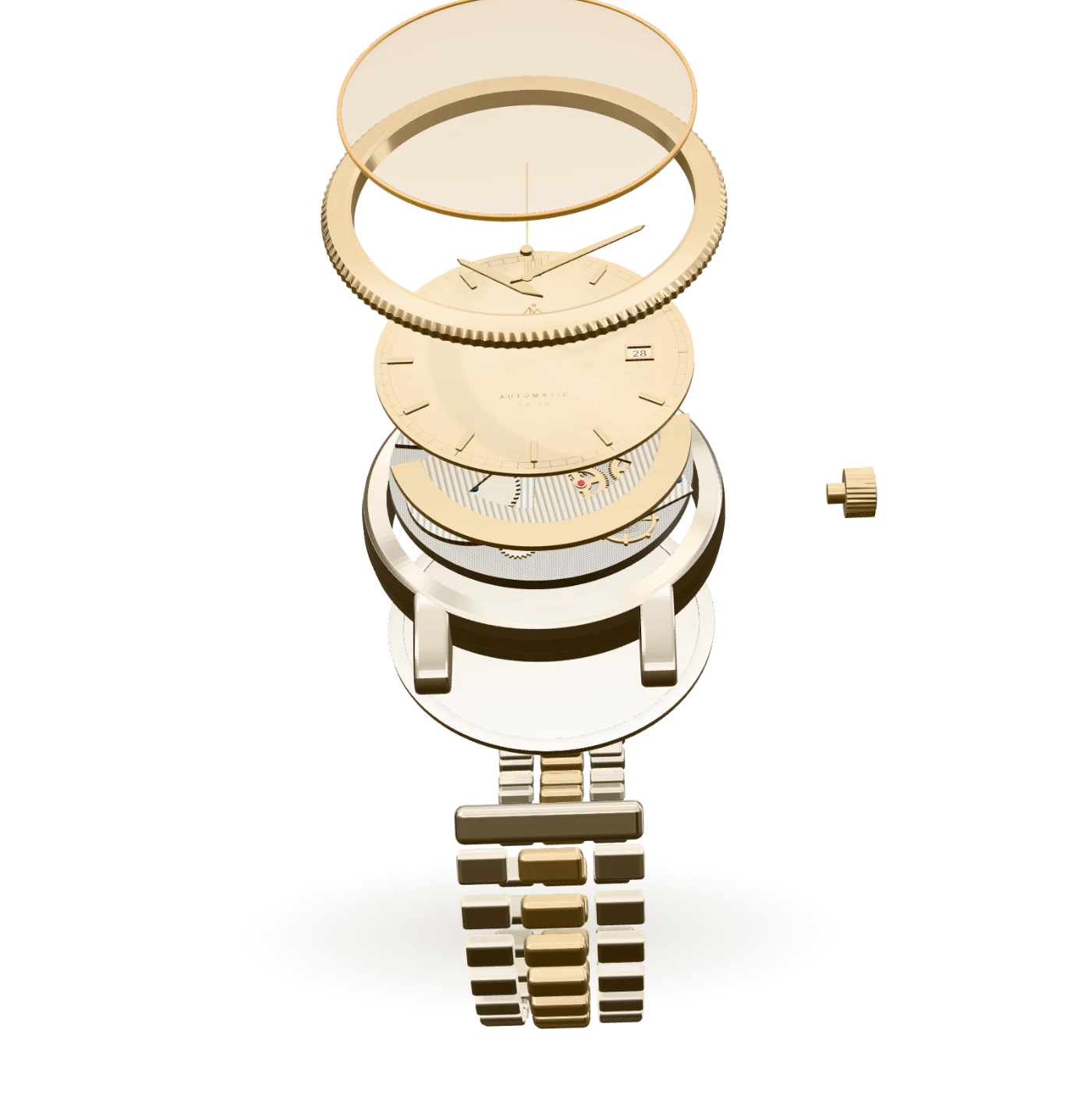
Every mechanical watch follows the same principle. A spring is wound and stores energy. A train of gears carries that energy forward. An escapement releases it in tiny, regular steps, and a balance wheel oscillating on a hairspring sets the rhythm of those steps.
An automatic watch adds a rotor: a weighted segment that turns as you move and keeps the spring wound. Worn daily, it never needs to be wound by hand.
This section describes mechanical watchmaking in general. NETERA-specific details further down are fictional demo content.
The movement
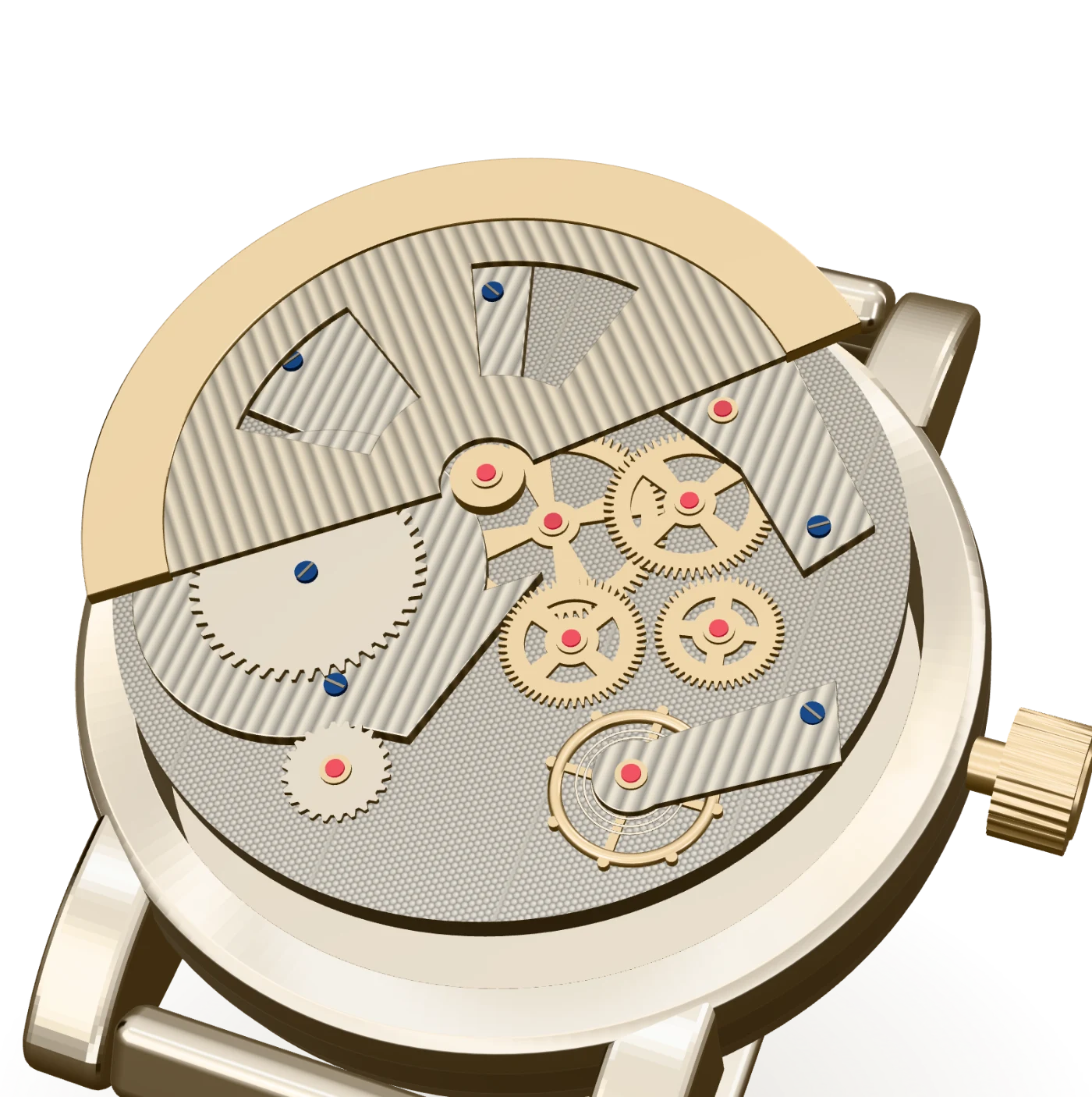
A weighted, oscillating segment that swings with every movement of the wrist and winds the mainspring automatically.
The coiled mainspring inside the barrel stores energy. The large ratchet wheel above it lets the spring be wound but not unwind backwards.
A sequence of wheels and pinions carries the spring’s energy toward the hands, stepping speed down from hours to seconds.
The escape wheel and pallet release the train in tiny, equal increments — the source of a mechanical watch’s tick.
The regulating organ: a weighted wheel oscillating on a fine spiral spring. Its steady rhythm is what keeps time.
Synthetic rubies act as low-friction bearings at the busiest pivots, reducing wear over decades.
Used to wind the watch by hand and to set the time and date.
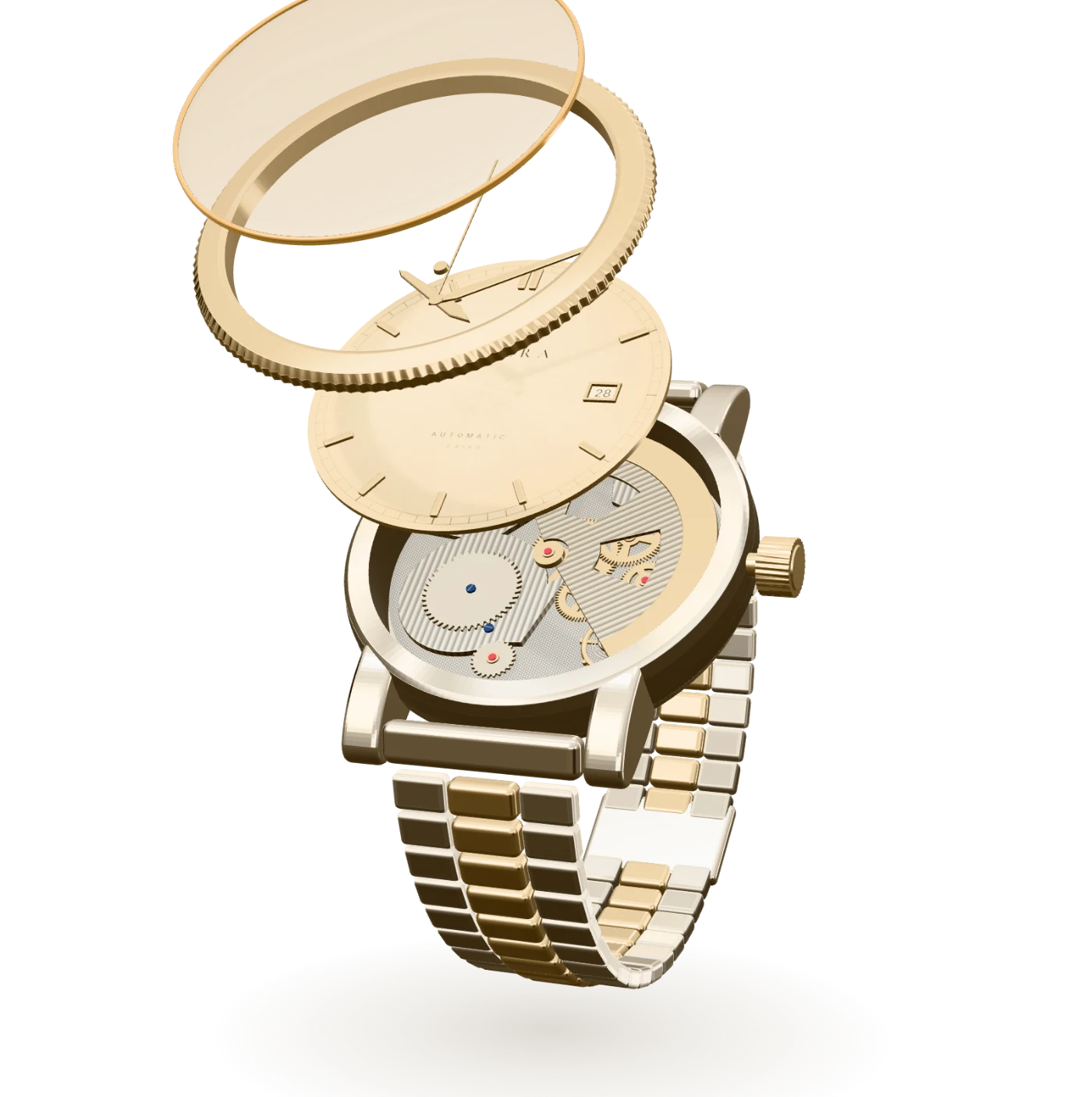
Anatomy
Materials & finishing
Finishes used across the fictional NETERA collection.
Brushed flanks and polished bevels on every case. Brushing hides everyday marks; polishing catches the light at the edges.
A thin, hard coating applied to bezels and centre links for a warm champagne tone that is more durable than plating.
Domed sapphire crystals with an anti-reflective inner coating, so the dial reads clearly at an angle.
Fine radial brushing that makes each dial shift in tone as it turns toward or away from the light.
Perlage (circular graining) on the main plate and Côtes de Genève stripes on the bridges and rotor.
Individually set hour markers that stand proud of the dial and catch light like small architectural details.
Precision · Proportion · Durability
Our fictional N.01 calibre is designed for an approximate 42-hour power reserve: take the watch off on Friday evening and it is still running on Sunday morning.
Four of six models measure 40 mm, with a slim profile of about 11 mm. The bezel width is set from one ratio so every dial opening feels the same calm size.
Screw-down case backs and sapphire crystals throughout. Nile, Astra and Limestone are rated to 100 m; Origin, Dune and Nocturne to 50 m.
The flagship
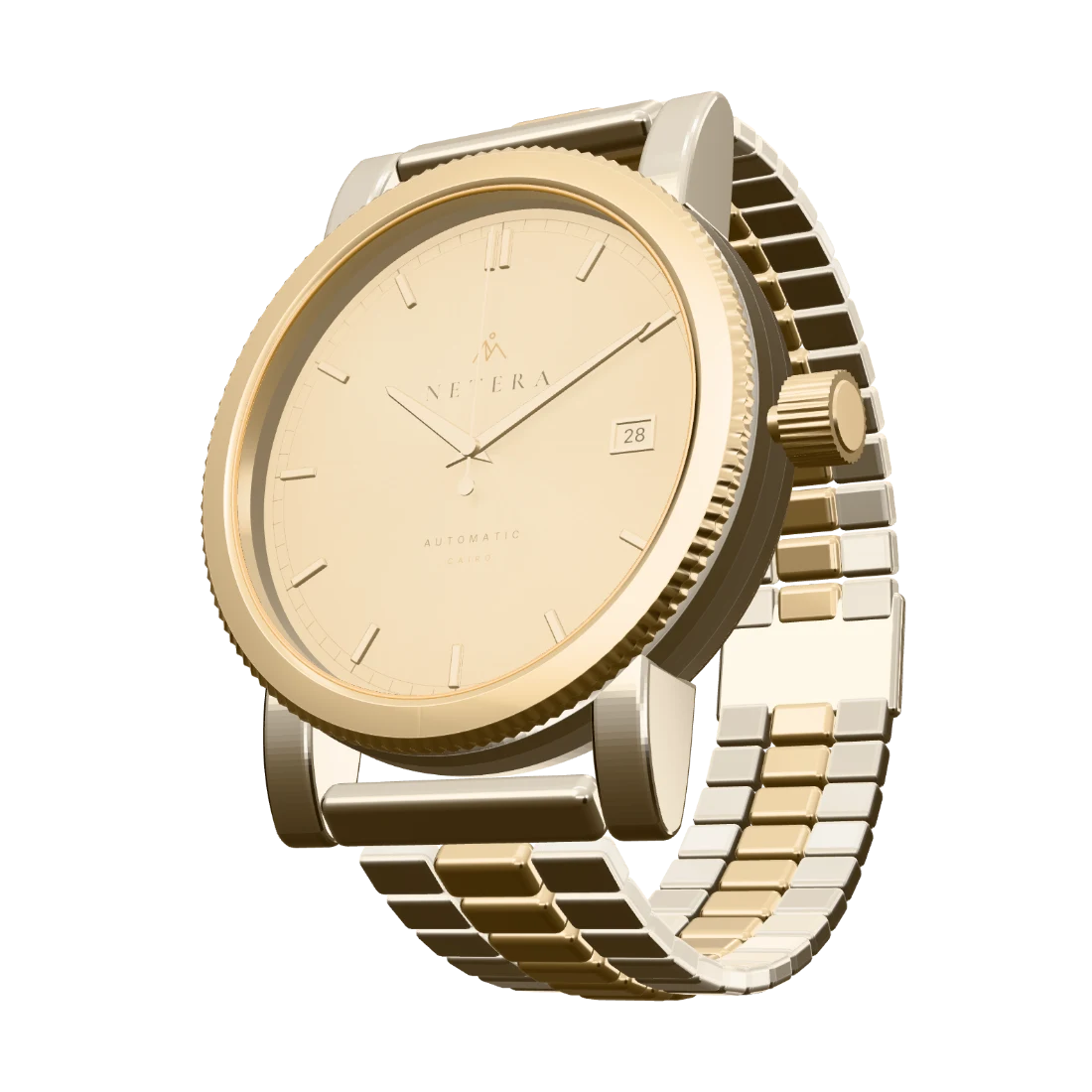
The NETERA flagship: a champagne-ivory sunray dial framed by a coin-edge bezel. From EGP 168,000.